
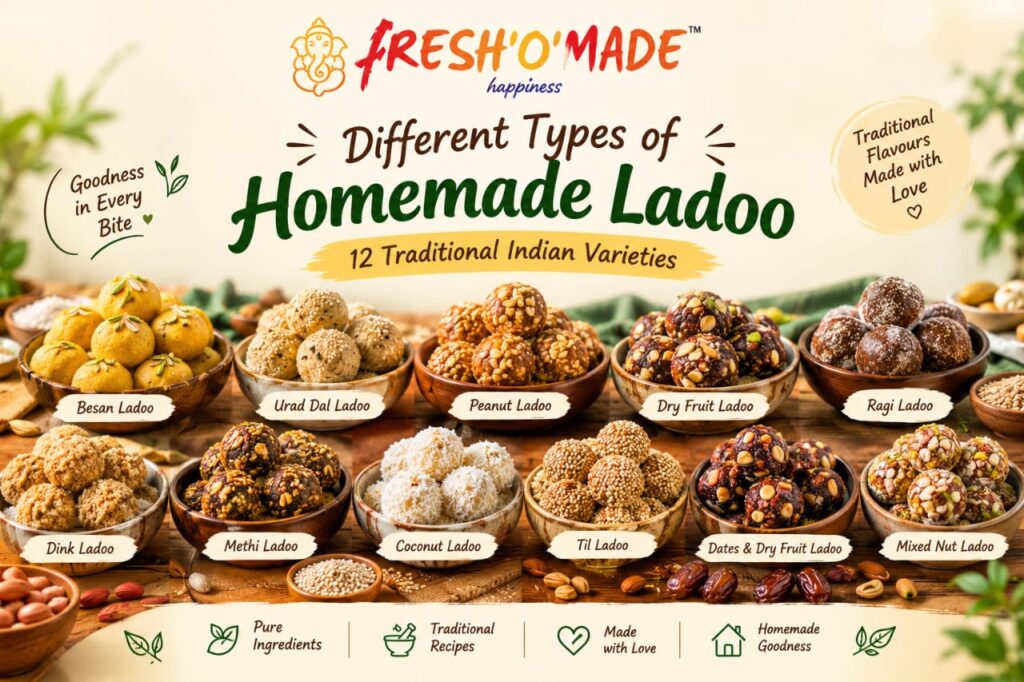
Different Types of Homemade Ladoo: 12 Traditional Indian Varieties
Ladoo is one of those Indian sweets that can instantly bring back memories of festivals, family celebrations and homemade treats. Made in countless ways across different regions of India, ladoo can be soft, rich, nutty, grain-based, mildly sweet or packed with dry fruits and seeds.
What makes ladoo particularly special is its variety. A traditional besan ladoo has a completely different taste and texture from a peanut ladoo, while ragi ladoo offers a grain-based option and dry fruit ladoo brings together the richness of nuts and dried fruits.
If you are searching for different types of homemade ladoo, there are many varieties to explore.
In this guide, we will look at 12 popular homemade ladoo varieties, their main ingredients, flavour profiles and occasions when people commonly enjoy them.
What Is Ladoo?
Ladoo, also spelled laddu, is a traditional Indian sweet generally shaped into small round balls.
The basic idea is simple: an ingredient such as gram flour, lentils, nuts, grains or dry fruits is combined with a sweetener and often ghee, spices or other ingredients. The mixture is then shaped into individual ladoos.
Different families and regions have their own recipes. Some ladoos are roasted slowly for a deeper flavour, while others are prepared using nuts, seeds or dried fruits.
This variety is one of the reasons ladoo remains such a popular Indian sweet.
Different Types of Homemade Ladoo
- Besan Ladoo
Besan ladoo is one of the most recognisable traditional Indian ladoos.
The main ingredient is besan, or gram flour. The flour is generally roasted carefully to develop its characteristic nutty aroma and flavour. Ghee and sugar are commonly used, while cardamom can add a pleasant fragrance.
A good besan ladoo has a rich roasted flavour and a soft, melt-in-the-mouth texture.
Why people love it
- Classic Indian sweet
- Rich roasted flavour
- Suitable for festivals and celebrations
- Easy to serve individually
- Pairs beautifully with cardamom and nuts
Besan ladoo is particularly associated with festive occasions and homemade celebrations.
- Urad Dal Ladoo
Urad dal ladoo is another traditional variety with a distinctive flavour.
Urad dal is roasted and ground before being combined with ingredients such as ghee, sugar and cardamom. The roasting process is important because it helps develop the characteristic aroma of the dal.
Compared with besan ladoo, urad dal ladoo has a different texture and a deeper roasted flavour.
For people who enjoy traditional Indian sweets beyond the usual varieties, urad dal ladoo is an interesting choice.
- Peanut Ladoo
If you enjoy the taste of roasted peanuts, peanut ladoo is a simple and delicious traditional option.
Roasted peanuts provide the main flavour. Depending on the recipe, jaggery can be used as the sweetener, with cardamom added for fragrance.
The combination of roasted peanuts and jaggery creates a naturally nutty and caramel-like flavour.
Peanut ladoo is also convenient because peanuts are easy to store and use in homemade recipes.
Peanut ladoo is especially enjoyable for:
- Everyday snacking
- Festival preparations
- Homemade sweet boxes
- Tea-time treats
- People who enjoy nut-based sweets
- Dry Fruit Ladoo
For a richer ladoo experience, dry fruit ladoo is a popular choice.
Dry fruit ladoos can contain a combination of ingredients such as almonds, cashews, dates, figs, raisins and other nuts or dried fruits. Recipes vary considerably depending on the ingredients available.
Unlike flour-based ladoos, dry fruit ladoos can have a naturally chewy and nutty texture.
They are also commonly prepared for festivals, gifting and special occasions.
A well-made dry fruit ladoo can be colourful, rich and satisfying without requiring a complicated recipe.
- Ragi Ladoo
Ragi ladoo brings together traditional ladoo-making with ragi, also known as finger millet.
Ragi has become increasingly popular in Indian kitchens, especially among people looking for more variety in their grain-based foods.
A typical ragi ladoo may combine roasted ragi flour with ghee and a sweetener such as jaggery or sugar. Cardamom and nuts can also be added.
The result is a ladoo with a pleasant roasted grain flavour.
Ragi ladoo is a good option for people who enjoy:
- Millet-based foods
- Traditional Indian recipes
- Homemade sweets
- Different flavours of ladoo
- Roasted grain flavours
- Dink Ladoo
Dink ladoo is a traditional Indian preparation often associated with winter and festive food traditions.
Dink, also known as edible gum, is used in traditional ladoo recipes along with ingredients such as wheat flour, nuts, jaggery or sugar and ghee. Recipes vary from family to family.
The texture can be rich and slightly crunchy depending on how the ingredients are prepared.
Dink ladoo has a strong connection with traditional homemade food and is often prepared in larger quantities for family consumption.
- Methi Ladoo
Methi ladoo is another traditional variety made using fenugreek seeds or methi.
Because methi has a naturally strong and slightly bitter flavour, making a balanced methi ladoo requires the right combination of ingredients.
Traditional recipes may include flour, ghee, jaggery or sugar, nuts and spices along with methi.
The result is quite different from sweet varieties such as besan or peanut ladoo.
Methi ladoo is especially interesting for people who enjoy traditional recipes with distinctive flavours.
- Coconut Ladoo
Coconut ladoo is a familiar Indian sweet made primarily with coconut.
Fresh coconut or desiccated coconut can be used depending on the recipe. The coconut is combined with a sweet ingredient and may be flavoured with cardamom.
Coconut ladoo has a soft texture and pleasant coconut aroma.
It is commonly prepared during festivals and celebrations and can be made in different styles.
For coconut lovers, this is one of the easiest ladoo varieties to recognise.
- Til Ladoo
Til ladoo, made with sesame seeds, is another traditional Indian sweet.
Roasted sesame seeds provide a characteristic nutty flavour and aroma. They are often combined with jaggery to form small round ladoos.
Til ladoo is particularly associated with winter and festivals such as Makar Sankranti in many parts of India.
The combination of roasted sesame and jaggery gives this ladoo a distinctive traditional taste.
- Besan and Dry Fruit Ladoo
Sometimes one ingredient is simply not enough!
A combination of besan and dry fruits can create a richer variation of traditional ladoo.
Roasted besan provides the base, while chopped nuts or dry fruits add texture and flavour. Cardamom can provide additional fragrance.
This type of ladoo is useful when you want the familiar taste of besan ladoo with additional nutty texture.
It can also make an attractive addition to a festive sweet box.
- Dates and Dry Fruit Ladoo
Dates and dry fruit ladoo is another popular modern variation of traditional ladoo.
Dates can provide sweetness and help bind nuts and dried fruits together. Depending on the recipe, almonds, cashews, walnuts, figs, raisins or other ingredients can be added.
The texture is usually soft and chewy with pieces of nuts providing a pleasant bite.
This variety is particularly popular among people who enjoy fruit-and-nut combinations.
It can also be shaped into small bite-sized balls for serving at gatherings.
- Mixed Nut Ladoo
A mixed nut ladoo brings several varieties of nuts together in one sweet.
Almonds, cashews, peanuts, pistachios or other nuts can be combined depending on the recipe. The nuts may be roasted before being processed and combined with the chosen sweetener.
The result can be rich, nutty and aromatic.
Mixed nut ladoos are particularly suitable for festive gift boxes because they look attractive and offer a more premium-style presentation.
How Are Homemade Ladoo Different From Each Other?
Although all ladoos share a similar round shape, their taste and texture can be completely different.
Here are some of the main factors that create this variety.
- The main ingredient
The base ingredient has the biggest effect on flavour.
For example:
- Besan → roasted, nutty flavour
- Peanut → strong roasted peanut flavour
- Ragi → earthy grain flavour
- Urad dal → rich roasted dal flavour
- Coconut → sweet coconut flavour
- Sesame → nutty sesame flavour
- Dry fruits → rich fruit-and-nut flavour
- The sweetener
Different recipes use different sweeteners.
Common choices include:
- Sugar
- Jaggery
- Dates
- Other naturally sweet dried fruits
- The sweetener can significantly change both taste and texture.
- Ghee
Ghee is an important ingredient in many traditional ladoo recipes.
It contributes richness and helps bring the ingredients together. The quantity of ghee also affects the final texture.
Too little can make some ladoos dry or difficult to shape, while too much can make them excessively soft or greasy.
- Roasting
Roasting is one of the most important parts of traditional ladoo preparation.
Flour, dal, grains, seeds and nuts can develop deeper aromas when roasted properly.
However, roasting needs care. Ingredients that are overheated can develop a burnt taste.
Which Ladoo Is Right for You?
There isn’t one ladoo that everyone will prefer. It depends on your taste.
If you like classic Indian sweets:
Try Besan Ladoo.
If you enjoy roasted flavours:
Try Urad Dal Ladoo or Peanut Ladoo.
If you enjoy nuts and dried fruits:
Try Dry Fruit Ladoo.
If you enjoy millet-based foods:
Try Ragi Ladoo.
If you like traditional winter preparations:
Try Dink Ladoo or Methi Ladoo.
If you love coconut:
Try Coconut Ladoo.
If you enjoy sesame and jaggery:
Try Til Ladoo.
This variety is what makes homemade ladoo so interesting.
Homemade Ladoo for Festivals and Celebrations
Ladoo has a special place in Indian celebrations.
They can be prepared for:
- Diwali
- Ganesh Chaturthi
- Makar Sankranti
- Raksha Bandhan
- Family functions
- Religious occasions
- Weddings
- Housewarming celebrations
- Festive gifting
A box containing different ladoo varieties can also give people the opportunity to taste several flavours instead of choosing only one.
For example, a festive box could include besan ladoo, peanut ladoo, dry fruit ladoo and ragi ladoo.
Why Homemade Ladoo Remain Popular
There is something special about homemade sweets.
When ladoos are prepared at home or by a small homemade food business, people often appreciate the traditional preparation style, familiar ingredients and variety of recipes.
Homemade ladoo can also be prepared in small batches, allowing different varieties to be offered according to the occasion.
For customers, the ability to choose between traditional favourites and newer combinations makes homemade sweets more interesting.
Explore Homemade Ladoo With Freshomade
At Freshomade, traditional Indian flavours are at the heart of our homemade food range.
Our ladoo varieties include favourites such as Besan Ladoo, Urad Dal Ladoo, Peanut Ladoo, Dry Fruit Ladoo, Ragi Ladoo and other traditional varieties.
Along with ladoos, you can explore homemade cookies, papad, chakli, kurdai, wafers and other traditional snacks.
The idea is simple: bring familiar Indian flavours into convenient homemade food options that can be enjoyed at home or shared with family and friends.
Whether you prefer the roasted flavour of besan, the nuttiness of peanuts, the richness of dry fruits or the earthy taste of ragi, there is a ladoo variety worth trying.
Frequently Asked Questions About Homemade Ladoo
What are the different types of homemade ladoo?
Popular varieties include besan ladoo, urad dal ladoo, peanut ladoo, dry fruit ladoo, ragi ladoo, dink ladoo, methi ladoo, coconut ladoo, til ladoo, dates and dry fruit ladoo and mixed nut ladoo.
Which ladoo is traditionally made with besan?
Besan ladoo is made primarily using roasted gram flour, commonly called besan. Ghee, sugar and cardamom are frequently used.
What is ragi ladoo?
Ragi ladoo is a ladoo variety made using ragi, or finger millet. Depending on the recipe, it can also contain ghee, jaggery or sugar, nuts and spices.
What is peanut ladoo made from?
Peanut ladoo is generally made with roasted peanuts and a sweetener such as jaggery or sugar. Cardamom may also be added for flavour.
Can different ladoo varieties be served together?
Yes. A mixed ladoo box can include several varieties such as besan, peanut, dry fruit and ragi ladoos, allowing people to enjoy different flavours.
Final Thoughts
The world of homemade ladoo is much bigger than a single recipe.
From the classic richness of besan ladoo to the roasted taste of peanut ladoo, the traditional flavour of urad dal ladoo, the richness of dry fruit ladoo and the grain-based character of ragi ladoo, every variety has something different to offer.
That is what makes Indian ladoo so special.
If you are looking for different types of homemade ladoo, start with a few traditional favourites and gradually explore new varieties. Whether you’re preparing sweets for a festival, buying a gift box or simply enjoying an evening treat with your family, homemade ladoo can bring a familiar taste of Indian tradition to the table.
Explore Freshomade’s range of homemade ladoo, cookies and traditional Indian snacks and discover your favourite flavour.