
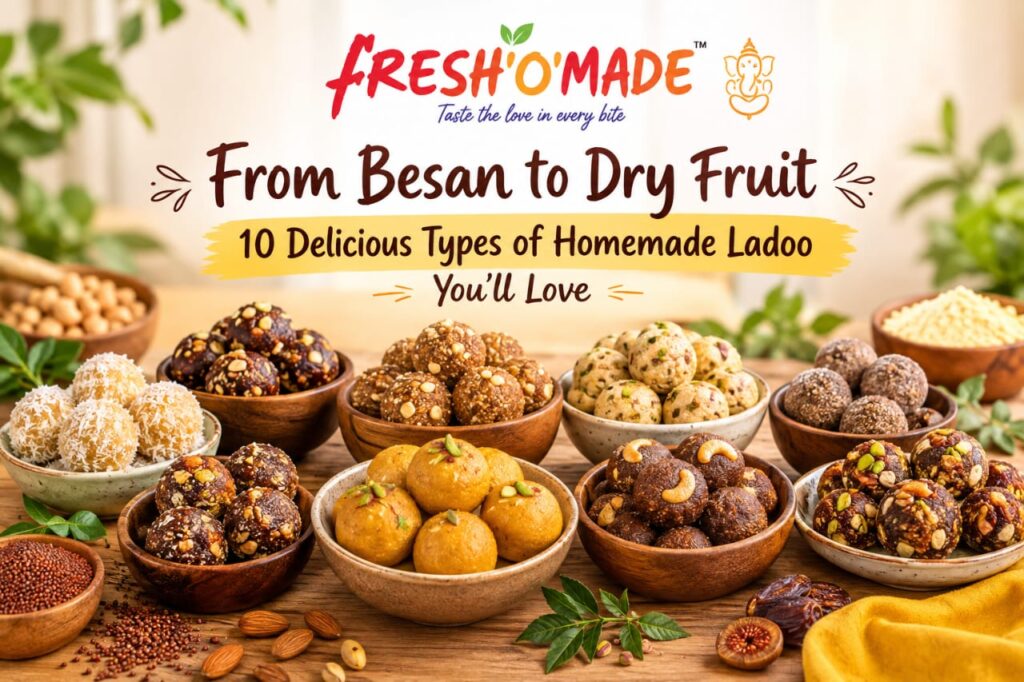
Ladoo is one of those Indian sweets that can instantly bring back memories of home, festivals and family celebrations. A plate of freshly made ladoo may look simple, but every variety has its own flavour, texture, aroma and story.
From the familiar richness of besan ladoo to the nutty taste of peanut ladoo and the festive appeal of dry fruit ladoo, there are countless types of ladoo made across Indian homes. Some are prepared for festivals, some for family occasions, and others are simply made when someone at home feels like enjoying a traditional sweet.
What makes homemade ladoo special is the variety. The basic idea is simple—combine carefully prepared ingredients, bring the mixture together and shape it into small round portions—but the ingredients can completely change the final result.
In this guide, let’s explore some popular different types of homemade ladoo, what makes each one unique, and when you might enjoy them.
What Makes Homemade Ladoo Special?
Homemade ladoo is more than just a sweet. It is often connected with Indian traditions and family recipes passed from one generation to another.
The ingredients can range from gram flour and semolina to peanuts, dry fruits, seeds, lentils and spices. Ghee is commonly used in many traditional ladoo recipes because it adds richness and helps bring the mixture together.
Another interesting thing about ladoo is that the same variety can taste different depending on how it is prepared. Roasting the ingredients properly can make a big difference to the aroma and flavour. The amount of sweetness, the type of fat used and the addition of cardamom, nuts or other ingredients can also change the final result.
That is why homemade ladoo can feel so personal. Every kitchen can have its own version.
- Besan Ladoo
Besan ladoo is probably one of the most recognisable traditional Indian ladoo varieties.
It is made primarily with besan, or gram flour, along with sugar or another sweetener and ghee. Cardamom is often added for aroma, while chopped nuts can be used as a garnish or mixed into the ladoo.
The most important part of making good besan ladoo is roasting the besan properly. When roasted patiently, besan develops a warm, nutty aroma that gives the ladoo its characteristic flavour.
A well-made besan ladoo should have a rich roasted taste without tasting raw or overly heavy.
Besan ladoo is particularly popular during festivals, family celebrations and special occasions. It is also one of the ladoo varieties many people associate with traditional Indian homemade sweets.
- Peanut Ladoo
Peanut ladoo is a simple and flavourful variety made using roasted peanuts.
The natural nuttiness of peanuts gives these ladoo a distinctive taste. Depending on the recipe, peanuts may be combined with jaggery or sugar and flavoured with cardamom.
Roasting the peanuts properly is important because it brings out their aroma and makes their flavour much more pronounced.
Peanut ladoo can be a good option for people who enjoy nut-based Indian sweets. It also has a wonderfully rustic character—simple ingredients, familiar flavours and a preparation style that feels very much at home in an Indian kitchen.
For a homemade food business such as Freshomade, peanut ladoo is also an interesting product because customers looking for traditional sweets often appreciate familiar ingredients presented in a convenient ready-to-eat form.
- Dry Fruit Ladoo
Dry fruit ladoo is a festive favourite and one of the most versatile varieties.
Depending on the recipe, it can contain ingredients such as almonds, cashews, pistachios, dates, figs, raisins and other dried fruits. Some versions use a small amount of ghee, while others rely mainly on the natural stickiness of dates or figs to bind the mixture.
One of the biggest attractions of dry fruit ladoo is its texture. You may get a combination of soft dried fruit, slightly crunchy nuts and fragrant spices in the same bite.
These ladoo are especially popular during festivals and celebrations when people want something that looks as special as it tastes.
There isn’t one single recipe for dry fruit ladoo. The ingredients can vary considerably, which makes this category particularly interesting for anyone who enjoys experimenting with homemade sweets.
- Urad Dal Ladoo
Urad dal ladoo is a traditional variety made using roasted urad dal.
The dal is usually processed into a fine or slightly coarse powder before being combined with other ingredients. Ghee, sugar and cardamom are commonly used depending on the recipe.
Like besan ladoo, urad dal ladoo depends heavily on proper roasting. The roasted dal develops a distinctive aroma and deeper flavour that gives this ladoo its identity.
The result is different from besan ladoo even though both are made using roasted pulses or flour-like ingredients.
Urad dal ladoo is a good example of how Indian sweets can turn everyday pantry ingredients into something special.
- Methi Ladoo
Methi ladoo is another traditional variety with a very distinctive flavour.
The main ingredient that sets it apart is methi, or fenugreek. Because fenugreek has a naturally strong and slightly bitter taste, preparing methi ladoo requires balancing its flavour with the other ingredients.
Recipes can include ingredients such as wheat flour, ghee, jaggery or sugar, nuts and spices. Some traditional versions also contain ingredients such as edible gum or other additions depending on regional and family traditions.
Methi ladoo is particularly associated with traditional homemade preparations and is often made during colder months or special family occasions.
Its flavour is quite different from sweeter varieties such as besan or dry fruit ladoo, which is exactly why people who enjoy traditional Indian sweets often seek it out.
- Dink Ladoo
Dink ladoo is another traditional Indian sweet, particularly familiar in Maharashtrian households.
The word dink refers to edible gum, which is commonly used in traditional ladoo preparations. A typical recipe can combine dink with ingredients such as wheat flour, nuts, coconut, jaggery or sugar and ghee.
Preparing dink ladoo requires attention because the edible gum needs to be fried properly so that it expands and develops the right texture.
Once prepared, the ingredients are combined and shaped into round ladoo.
Dink ladoo is strongly connected with traditional home cooking and seasonal food traditions. Its combination of nuts, roasted ingredients and ghee gives it a rich, hearty character.
- Ragi Ladoo
Ragi ladoo is made using ragi, also known as finger millet.
Ragi has become increasingly popular in modern Indian cooking because it can be used in many different dishes, including rotis, dosas, cookies and sweets.
For ladoo, ragi flour can be roasted and combined with ingredients such as jaggery, ghee and cardamom. Nuts or seeds may also be included depending on the recipe.
The flavour is earthy and distinctive compared with gram-flour-based ladoo.
Ragi ladoo is an example of how traditional Indian ingredients can be used in a familiar sweet format. It can be particularly appealing to people who already enjoy millet-based foods and want to explore different ways of using ragi.
- Coconut Ladoo
Coconut ladoo is another much-loved Indian sweet.
It can be made using fresh coconut, desiccated coconut or a combination depending on the recipe. Milk, condensed milk, sugar or jaggery may be used in different versions.
The flavour is naturally aromatic and coconut-forward.
Coconut ladoo is often associated with festivals and celebrations and is relatively simple compared with some more elaborate Indian sweets.
The texture can range from soft and moist to slightly chewy depending on the ingredients and preparation method.
A little cardamom can add a lovely fragrance and complement the coconut.
- Dates and Dry Fruit Ladoo
Dates and dry fruit ladoo are a popular modern take on traditional ladoo-making.
Dates naturally have a sticky texture, which makes them useful for binding chopped or ground nuts and dried fruits together. A typical combination may include dates, almonds, cashews, walnuts, figs, raisins or seeds. Cardamom can be added for extra fragrance.
Unlike some traditional ladoo recipes that depend heavily on sugar syrup, date-based ladoo can get much of its sweetness from the dates themselves. This makes them an interesting option for people who enjoy the combination of dried fruits and nuts.
The texture is usually dense and chewy, with little pieces of nuts adding contrast.
- Anjeer Ladoo
Anjeer, or dried fig, is another ingredient that works beautifully in ladoo. Anjeer ladoo can combine dried figs with nuts, dates and spices. The dried fig gives the mixture a naturally fruity flavour and a slightly chewy texture.
When combined with crunchy nuts, the contrast makes each bite more interesting. Anjeer ladoo also has a naturally rich appearance, making it suitable for festive gift boxes and special occasions.
As with other dry fruit varieties, recipes differ from one household to another. Some versions are softer, while others have a firmer texture that holds its shape well.
How Are Homemade Ladoo Different From One Another?
The easiest way to understand the variety is to look at the main ingredient. Besan ladoo gets its character from roasted gram flour. Peanut ladoo has a pronounced roasted peanut flavour.
- Dry fruit ladoo focuses on nuts and dried fruits.
- Urad dal ladoo has the distinctive flavour of roasted urad dal.
- Methi ladoo has the characteristic taste of fenugreek balanced with sweet and aromatic ingredients.
- Dink ladoo is associated with edible gum and traditional ingredients.
- Ragi ladoo has the earthy flavour of finger millet.
- Coconut ladoo is aromatic and coconut-rich.
- Dates and dry fruit ladoo combines chewy dried fruit with nuts.
- Anjeer ladoo brings together dried fig, nuts and spices.
This variety is one of the reasons ladoo remains such an interesting part of Indian food culture.
How to Choose the Right Homemade Ladoo
There isn’t one ladoo that suits everyone. Your choice can simply come down to the flavour and texture you enjoy.
- If you like roasted gram flour and a classic Indian sweet, besan ladoo may appeal to you.
- If you enjoy nuts, peanut or dry fruit ladoo are natural choices.
- If you prefer millet-based foods, you might enjoy ragi ladoo.
For dried-fruit lovers, dates, anjeer or dry fruit ladoo offer different combinations of texture and flavour.
And if you enjoy traditional regional recipes, methi, urad dal or dink ladoo are worth exploring.
The important thing is to check the ingredient list, especially if you have food allergies or specific dietary requirements.
How Should Homemade Ladoo Be Stored?
Storage depends on the ingredients used and the recipe.
In general, ladoo should be kept in a clean, dry and airtight container and protected from moisture and excessive heat.
Some ladoo containing fresh ingredients may have a shorter shelf life than varieties made mainly with roasted dry ingredients.
For packaged ladoo, always follow the storage instructions and best-before information provided by the manufacturer.
If you are making ladoo at home, use clean utensils and containers and allow the ladoo to cool properly before storing them.
Homemade Ladoo for Festivals and Everyday Moments
One of the best things about ladoo is that you don’t need a festival as an excuse to enjoy them.
They are naturally suited to celebrations such as Diwali, Ganesh Chaturthi, Raksha Bandhan and other family occasions, but they can also be enjoyed as an everyday sweet or served when guests visit.
Different ladoo varieties can also make an attractive gift box. Combining flavours such as besan, peanut and dry fruit gives people an opportunity to try several traditional favourites instead of receiving only one type.
For a homemade food brand, this variety can also make ladoo collections more interesting for customers.
Why Traditional Ladoo Still Matter Today
Food trends change quickly, but traditional ladoo continue to have a place in Indian homes.
Part of the reason is familiarity. Many people grew up eating ladoo prepared by parents or grandparents. Another reason is flexibility: the same basic idea can be adapted using different grains, pulses, nuts, fruits and spices.
Modern food businesses are also giving traditional sweets new packaging, presentation and combinations while keeping the familiar flavours people recognise.
That balance between tradition and convenience is what makes homemade ladoo relevant even today.
Explore Homemade Ladoo From Freshomade
At Freshomade, traditional Indian flavours are an important part of our food collection.
Our range includes varieties such as Besan Ladoo, Peanut Ladoo, Dry Fruit Ladoo and other traditional homemade sweets, prepared for customers who enjoy familiar Indian flavours in a convenient form.
Whether you are looking for a classic besan ladoo, a nutty peanut ladoo or a richer dry fruit variety, exploring different types is a delicious way to discover the diversity of Indian sweets.
The next time you see a box of ladoo, don’t think of it as just one type of sweet. Look at the ingredients, the preparation and the tradition behind it.
From humble besan to festive dry fruits, every ladoo has its own character—and that is what makes homemade Indian sweets so special.
Frequently Asked Questions About Homemade Ladoo
What are the different types of homemade ladoo?
Some popular varieties include besan ladoo, peanut ladoo, dry fruit ladoo, urad dal ladoo, methi ladoo, dink ladoo, ragi ladoo, coconut ladoo, dates dry fruit ladoo and anjeer ladoo.
Which ladoo is made from besan?
Besan ladoo is made primarily from roasted gram flour, also called besan. Ghee, sugar and cardamom are commonly used in traditional recipes.
What is peanut ladoo made from?
Peanut ladoo is generally prepared using roasted peanuts combined with a sweetening ingredient such as jaggery or sugar. Cardamom may be added for flavour.
What is dry fruit ladoo?
Dry fruit ladoo is a sweet made using a combination of dried fruits and nuts. Recipes vary and may include dates, figs, almonds, cashews, pistachios and other ingredients.
How should homemade ladoo be stored?
Most homemade ladoo should be stored in a clean, dry, airtight container. The exact storage method and shelf life depend on the ingredients and recipe, so packaged products should be stored according to their label instructions.
Which ladoo is made with ragi?
Ragi ladoo is made using ragi, or finger millet, usually combined with ingredients such as jaggery, ghee and cardamom depending on the recipe.
Can different types of ladoo be included in a gift box?
Yes. A selection containing varieties such as besan, peanut and dry fruit ladoo can make an appealing traditional Indian sweet assortment for festivals and celebrations.
Final Thoughts
There is no shortage of different types of homemade ladoo to explore.
Some are nutty, some are rich and roasted, some are fruity, and others have distinctive traditional flavours. What they have in common is the simple idea of turning carefully prepared ingredients into a small, memorable sweet.
Whether you prefer classic besan ladoo, peanut ladoo, dry fruit ladoo, methi ladoo or a millet-based ragi ladoo, there is always another variety waiting to be discovered.
And perhaps that is the best thing about ladoo: one small round sweet can carry an entire tradition with it.