
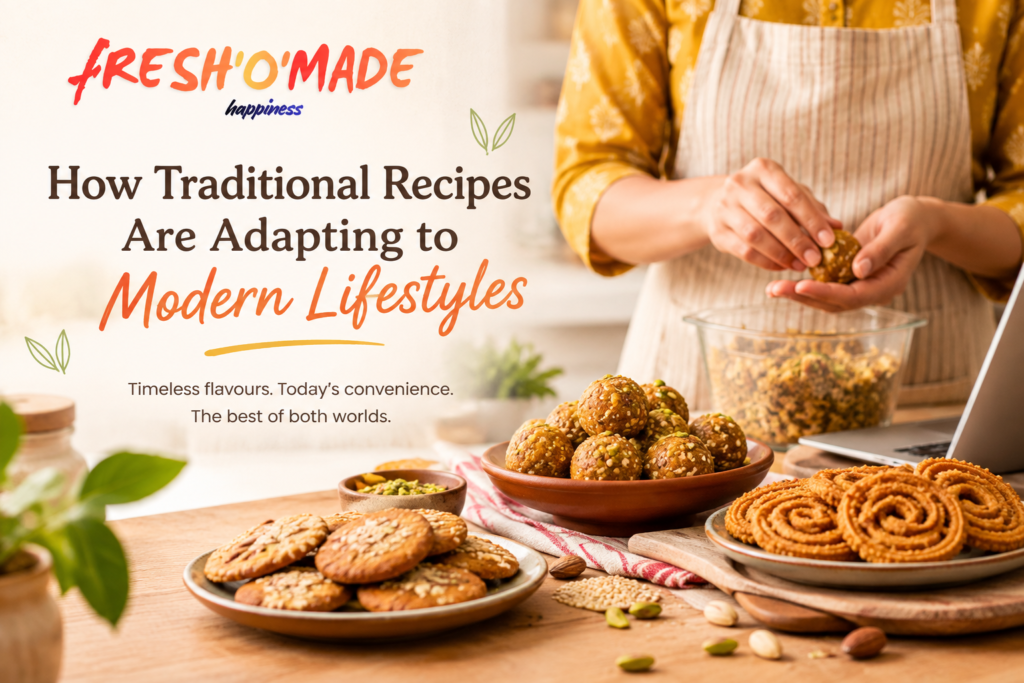
Traditional recipes have always been more than instructions for preparing food. They carry memories, family traditions, regional flavours, and cooking practices passed from one generation to another. But lifestyles have changed. People are busier, families are smaller, working hours are longer, and convenience has become an important part of everyday food choices.
Interestingly, this has not necessarily meant that traditional food is disappearing. Instead, traditional recipes are adapting to modern lifestyles.
A family recipe that once took several hours to prepare may now be simplified for a busy weekday. A traditional snack may be prepared in smaller batches, baked instead of fried, or packaged in a convenient portion. Ingredients may also be adjusted to suit changing preferences without completely losing the character of the original recipe.
This balance between tradition and convenience is becoming increasingly important for today’s food culture. People still want the flavours they grew up with, but they also want food that fits into their schedules.
Why Traditional Recipes Still Matter
Food is closely connected to identity and memories.
A particular ladoo may remind someone of Diwali at their grandparents’ home. Homemade chakli may bring back memories of preparing snacks with family before a festival. A simple regional dish can remind someone of their hometown even when they are living in another city.
That emotional connection is one reason traditional recipes continue to matter.
Traditional recipes also represent local ingredients and cooking knowledge. Many Indian recipes developed around what was naturally available in a particular region. Cooking techniques were often passed down through experience rather than written measurements.
Today, people may not have the same amount of time to cook, but the desire for familiar flavours remains.
This is where adaptation becomes important.
How Traditional Recipes Are Changing
Traditional recipes are not necessarily being replaced by modern food. In many cases, they are being modified to suit contemporary routines.
Here are some of the most noticeable changes.
1. Traditional Recipes Are Becoming More Convenient
Time is one of the biggest factors influencing modern food choices.
Earlier, preparing certain snacks or sweets at home could involve several steps, from preparing ingredients to cooking and storing the finished food. For someone working a full-time job or managing a busy household, repeating that process regularly may not be practical.
As a result, traditional recipes are increasingly being prepared in ways that reduce preparation time.
For example, people may prepare ingredients in advance, use kitchen appliances to reduce manual work, or make larger batches and store them properly for later use.
The recipe remains familiar, but the process becomes more practical.
This is particularly relevant to traditional Indian snacks. Cookies, ladoo, chakli, papad and other snacks can be prepared in batches so they are available when needed.
Convenience, therefore, does not always mean abandoning tradition. Sometimes it simply means finding a more manageable way to preserve it.
2. Smaller Portions Are Becoming More Popular
Household structures have changed considerably.
Many families today have fewer members, and individuals living alone or as couples may not want to prepare large quantities of food.
Traditional recipes are therefore being adapted into smaller portions.
Instead of making a large batch of sweets for an entire family, someone may prepare a smaller quantity for occasional enjoyment. Similarly, snack businesses can offer smaller packs that are easier for individuals and smaller households to consume.
This change can also reduce food waste.
Smaller portions allow people to enjoy traditional flavours without having to prepare or purchase more food than they actually need.
3. Health-Conscious Changes Are Influencing Traditional Recipes
Health awareness has also changed the way people approach traditional food.
Consumers are increasingly interested in ingredients, preparation methods, portion sizes, and nutritional information. This does not mean everyone wants to completely change traditional recipes, but many people are looking for a balance.
For example, some recipes may be modified by:
- Reducing added sugar
- Adjusting portion sizes
- Using different grains or flours
- Including ingredients such as ragi or millet
- Choosing baking over deep frying in certain preparations
- Paying more attention to ingredient quality
The important point is that these changes need to be made carefully.
A traditional recipe is often valued because of its original taste and texture. If too many elements are changed, it may stop feeling like the food people remember.
The challenge is finding the right balance between traditional flavour and modern preferences.
4. Modern Kitchen Appliances Are Changing Preparation Methods
Technology has quietly changed home cooking.
Mixers, food processors, ovens, air fryers, refrigerators, storage containers and other kitchen tools can make traditional cooking considerably easier.
A recipe that once required extensive manual preparation may now be completed with the help of modern equipment.
Air fryers, for example, have encouraged many home cooks to experiment with different versions of traditionally fried foods. Ovens have also made baking more accessible to people who may not have previously considered making homemade cookies or snacks.
The cooking equipment changes, but the inspiration can remain traditional.
This is an important distinction. Modern technology does not necessarily make a recipe less traditional. It can sometimes help people continue preparing recipes that would otherwise be too time-consuming.
5. Traditional Snacks Are Becoming Everyday Foods
Many traditional Indian snacks were historically associated with festivals, special occasions or family gatherings.
Today, some of these foods have become part of everyday snacking.
Ladoo, cookies, chakli, papad and other traditional-style snacks can now be found not only during festivals but also as tea-time or occasional snacks.
This change is partly driven by convenience and partly by growing interest in familiar Indian flavours.
Modern consumers may want something quick to eat, but that does not mean they always want an unfamiliar or highly processed flavour.
Traditional snacks can provide a connection to familiar food while fitting into a modern routine.
6. Regional Recipes Are Reaching New Audiences
One of the most interesting changes is the increased visibility of regional Indian food.
Digital platforms, food creators, online businesses and social media have made it easier for people to discover recipes from different parts of India.
A snack that was once primarily known in one region can now be introduced to people across the country.
For example, someone living in Mumbai may discover a traditional snack from another state through a recipe video or food brand. They may then try making it at home or look for a convenient version online.
This creates an opportunity for traditional recipes to travel without losing their regional identity.
The recipe may be presented differently, but the story and flavour behind it can remain intact.
7. Homemade Food Is Moving Online
The internet has changed how people discover food.
Earlier, finding a homemade food business often depended on personal recommendations. Today, customers can discover homemade snacks through Google Search, social media, marketplaces, websites and online communities.
This has created new opportunities for small food businesses.
A homemade food brand can tell customers where a recipe comes from, how a product is prepared, what ingredients are used and why a particular snack is special.
For consumers, this can make food feel more personal.
Instead of simply seeing a packaged product, they can understand the story behind it.
For brands such as Freshomade, this connection between traditional flavours and modern convenience can be particularly valuable.
8. Traditional Recipes Are Becoming More Accessible
Another important change is accessibility.
Not everyone has a family member who knows how to prepare traditional recipes. Families move to different cities and countries, and younger generations may not have learned every recipe from their grandparents.
Online recipes, cooking videos and food communities are helping preserve this knowledge.
Someone who has never made besan ladoo can search for a recipe and learn the process. Someone interested in a regional snack can discover its ingredients and preparation method within minutes.
In this way, technology can actually help preserve traditional food culture.
The recipe may now be learned through a smartphone instead of a family kitchen, but the knowledge continues to be passed on.
9. Food Brands Are Combining Tradition With Convenience
Modern food businesses are also playing a role in this transformation.
Customers increasingly expect food to be convenient, consistent and easy to access. At the same time, many still value authenticity and traditional flavours.
This creates an interesting space for homemade and traditional-food brands.
A brand does not necessarily need to choose between tradition and modernity.
It can preserve the flavour profile of a traditional recipe while improving packaging, availability, portion sizes, ordering convenience and presentation.
For example, traditional cookies or ladoo can be presented in packaging that is suitable for modern customers while maintaining the familiar character of the product.
The recipe remains connected to tradition, while the experience around it becomes modern.
10. Packaging and Storage Are Part of the Modern Food Experience
Traditional recipes have also adapted because food storage expectations have changed.
Consumers want snacks that are easy to store, carry and consume.
A traditional snack may therefore be offered in an airtight package or smaller portion rather than a large container intended for immediate family consumption.
Good packaging can also help protect texture and freshness.
This is especially important for snacks such as cookies and chakli, where moisture can affect the eating experience.
Modern packaging does not have to compete with traditional food. When done properly, it can help traditional products fit into contemporary lifestyles.
Is Modernisation Taking Away From Tradition?
This is an important question.
Some people worry that changing traditional recipes means losing authenticity.
That concern is understandable. Food traditions can disappear when recipes are modified so extensively that their original identity is no longer recognisable.
But adaptation does not always mean losing tradition.
There is a difference between changing the way a recipe is prepared or presented and changing everything that makes the recipe culturally meaningful.
A family may still use the same basic ingredients and flavour profile while using a modern appliance.
A snack may be packaged differently while retaining its traditional recipe.
A sweet may be made in a smaller batch without losing its identity.
In many cases, adaptation may actually help traditions survive.
What Modern Consumers Really Want
Modern food choices are rarely based on a single factor.
People consider taste, convenience, price, quality, ingredients, availability and personal preferences.
When it comes to traditional food, there is an additional factor: familiarity.
People often want food that feels authentic but does not create additional work.
This is why traditional recipes that can fit naturally into modern routines have strong potential.
The opportunity is not to make traditional food completely modern. It is to make traditional food easier to enjoy without losing what makes it special.
The Role of Freshomade
At Freshomade, we believe the future of traditional snacks lies in finding this balance.
Homemade food carries a sense of familiarity that is difficult to replace. At the same time, modern customers value convenience and accessibility.
Freshomade’s focus on homemade cookies, ladoo and traditional snacks is inspired by this idea: familiar flavours can still have a place in modern everyday life.
The goal is not simply to recreate the past. It is to bring the comfort of traditional food into the present in a way that works for today’s consumers.
That could mean convenient ordering, thoughtful packaging, small-batch preparation or simply making traditional snacks easier to discover.
The Future of Traditional Recipes
Traditional recipes are likely to continue evolving.
Some will remain almost unchanged because their preparation and cultural importance are deeply established. Others will be adapted to suit changing dietary preferences, smaller households and busy schedules.
Technology will continue to influence how people cook and discover recipes.
Food businesses will continue experimenting with packaging, delivery and presentation.
And younger generations will continue finding new ways to connect with recipes that belonged to their parents and grandparents.
The most successful traditional recipes may be the ones that can adapt without losing their identity.
Final Thoughts
Traditional food does not have to remain frozen in the past.
Recipes have always evolved. Ingredients change, cooking tools change, families change and lifestyles change. What remains important is the connection between the food and the people who enjoy it.
Today, traditional recipes are adapting to modern lifestyles through convenient preparation, smaller portions, modern cooking equipment, changing ingredient preferences, improved packaging and easier online access.
The result is not necessarily the disappearance of traditional food. Instead, it can be a new version of tradition—one that respects familiar flavours while making them easier to enjoy in everyday life.
That may ultimately be the best way to keep traditional recipes alive: not by refusing to change them, but by allowing them to evolve with the people who love them.