
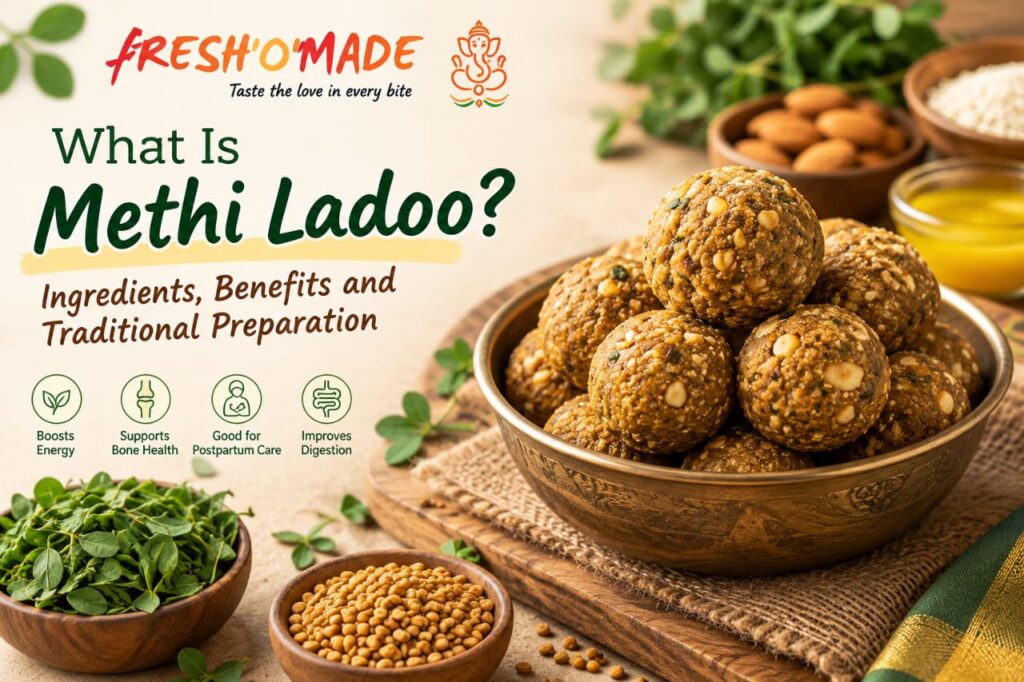
It is a traditional Indian sweet made using fenugreek seeds, whole wheat flour, edible gum, nuts, spices and ghee. It is especially popular during the colder months and is traditionally prepared in many Indian homes as a nourishing winter food.
Unlike ordinary sweets, it is known for its distinctive combination of methi’s slightly bitter taste, the richness of ghee, the nuttiness of dry fruits and the sweetness of jaggery or sugar.
But what exactly is methi ladoo? What ingredients are used to make it? Why is it traditionally eaten during winter? And how is it prepared?
Let’s explore everything about this traditional Indian ladoo.
What Is Methi Ladoo?
Methi ladoo is a traditional Indian ladoo prepared primarily with fenugreek seeds (methi) along with ingredients such as wheat flour, ghee, jaggery, edible gum (gond), dry fruits and warming spices.
Fenugreek seeds have a naturally strong and slightly bitter flavour. Traditional recipes balance this flavour with sweeteners, ghee, nuts and aromatic spices.
Its recipes can differ from one household or region to another. Some families use wheat flour, while others include millet or other flour. The quantity of methi, type of sweetener and selection of nuts can also vary.
The result is a dense, aromatic ladoo with a rich flavour and a characteristic methi taste.
Is Methi Ladoo Sweet or Bitter?
Methi ladoo can have a slightly bitter and earthy flavour, but it should not taste overwhelmingly bitter when properly prepared.
Traditional preparation often involves roasting or processing methi seeds and combining them with sweet ingredients, ghee, nuts and spices. These ingredients help create a more balanced flavour.
The final taste depends greatly on the quantity and preparation of methi.
Traditional Methi Ladoo Ingredients
Although recipes vary, traditional methi ladoo commonly contains several of the following ingredients:
1. Methi Seeds
Methi seeds, also known as fenugreek seeds, are the main characteristic ingredient.
They have a naturally bitter, earthy taste and strong aroma. Traditionally, they are roasted or otherwise prepared before being incorporated into the ladoo mixture.
2. Wheat Flour
Whole wheat flour is commonly used as the base in many traditional methi ladoo recipes.
It provides body and a roasted, nutty flavour after being cooked in ghee.
3. Ghee
Ghee plays an important role in traditional ladoo preparation.
It helps roast the flour and other ingredients, contributes richness and aroma, and helps the mixture come together while shaping the ladoos.
4. Jaggery or Sugar
A sweetener is added to balance the natural bitterness of methi.
Jaggery is commonly preferred in many traditional preparations because of its deep, caramel-like flavour.
5. Edible Gum (Gond)
Edible gum is used in many traditional winter ladoos.
When fried correctly in ghee, gond expands and becomes light and crisp. It adds texture to the ladoo mixture.
6. Dry Fruits and Nuts
Almonds, cashews, walnuts, pistachios and other nuts may be included depending on the recipe.
They add crunch, flavour and richness.
7. Seeds
Some recipes also include ingredients such as sesame seeds, melon seeds or other edible seeds.
8. Spices
Traditional methi ladoos may contain spices such as:
- Cardamom
- Dry ginger powder (sonth)
- Nutmeg
- Black pepper
- Cinnamon
The exact combination depends on the family recipe.
What Does Methi Ladoo Taste Like?
It has a flavour that is quite different from besan or boondi ladoo.
You may notice several flavours at once:
- Sweetness from jaggery or sugar
- Earthiness from methi
- Richness from ghee
- Roasted flavour from flour and nuts
- Warm aroma from spices
- Nutty flavour from dry fruits and seeds
A well-balanced methi ladoo should have a pleasant combination of sweetness and the characteristic flavour of fenugreek.
Why Is Methi Ladoo Traditionally Made in Winter?
It is traditionally associated with the colder months in several Indian households.
Winter recipes often feature ingredients such as ghee, nuts, seeds, gond, spices and methi. These foods are traditionally valued as energy-rich and nourishing additions to the winter diet.
It is also convenient to store and eat in small portions, making it a practical homemade winter sweet.
However, traditional food practices are not the same as medical treatment. It should be considered a food rather than a medicine.
Potential Benefits of Methi Ladoo
The nutritional value of methi ladoo depends on the exact ingredients, quantities and serving size.
Because traditional recipes commonly contain nuts, seeds, whole grains, ghee and methi, the ladoo can provide a combination of carbohydrates, fats, plant-based protein, fibre and micronutrients.
Here are some potential nutritional benefits of its ingredients.
Methi Seeds and Fibre
Fenugreek seeds naturally contain dietary fibre and various plant compounds.
Including methi as part of a balanced diet can contribute to overall dietary fibre intake.
Nuts Provide Healthy Fats and Protein
Almonds, walnuts, cashews and other nuts can contribute fats, protein and several micronutrients.
They also make the ladoo more filling and flavourful.
Ghee Provides Energy
Ghee is a concentrated source of fat and therefore provides energy.
Because it can be calorie-dense, portion size is important.
Spices Add Flavour
Traditional spices such as cardamom, ginger and cinnamon contribute aroma and flavour, allowing the ladoo to have a complex taste without relying only on sweetness.
Traditional Winter Nourishment
The combination of flour, ghee, nuts, seeds and sweetener makes methi ladoo an energy-dense traditional food.
It can be enjoyed as part of a balanced diet, particularly when eaten in moderation.
How Is Traditional Methi Ladoo Prepared?
The exact method differs between recipes, but traditional preparation generally follows a similar process.
Step 1: Prepare the Methi
Methi seeds are cleaned and prepared according to the recipe.
Some traditional recipes use powdered methi, while others use a specially processed form to reduce excessive bitterness.
Step 2: Roast the Flour
Whole wheat flour is slowly roasted in ghee over low to medium heat.
This step is important because proper roasting develops the characteristic nutty aroma of the flour.
The flour should be cooked patiently rather than browned too quickly.
Step 3: Prepare Gond
If edible gum is being used, it is generally fried in ghee until it expands.
After cooling, it is crushed into smaller pieces.
Step 4: Roast the Nuts and Seeds
Nuts and seeds can be lightly roasted to enhance their flavour.
They may then be chopped or coarsely ground depending on the desired texture.
Step 5: Combine the Ingredients
The roasted flour, prepared methi, gond, nuts, seeds and spices are mixed thoroughly.
The mixture should have an even distribution of ingredients.
Step 6: Add the Sweetener
Jaggery or another sweetener is incorporated according to the recipe.
The method of adding jaggery varies between recipes, so it is important to follow the specific recipe being used.
Step 7: Shape the Ladoos
Once the mixture reaches a suitable temperature and consistency, portions are taken and shaped into round ladoos.
The mixture should be warm enough to bind but comfortable enough to handle safely.
Step 8: Cool and Store
The finished ladoos are allowed to cool completely before being placed in a clean, dry, airtight container.
Proper storage helps maintain their texture and flavour.
How to Store Methi Ladoo
It generally contains ingredients such as ghee, nuts and flour, so proper storage is important.
For best quality:
- Store in a clean airtight container.
- Keep away from moisture.
- Use a clean, dry spoon or hand when serving.
- Avoid direct sunlight and excessive heat.
- Follow the storage instructions of the specific recipe or product.
- Always check for changes in smell, appearance or taste before consuming.
The shelf life depends on the recipe, moisture level, ingredients and storage conditions.
How Many Methi Ladoos Can You Eat?
There is no single serving size that is appropriate for everyone.
Methi ladoo can be energy-dense because it commonly contains ghee, nuts and sweeteners. Therefore, portion size matters.
A small serving can be easier to include in a balanced diet than eating several ladoos at once.
People following a specific diet should consider the ingredients and nutritional information of the particular methi ladoo they are eating.
Methi Ladoo vs Other Traditional Ladoos
Indian ladoos come in many varieties, and each has its own ingredients and flavour profile.
Besan ladoo is primarily based on roasted gram flour and ghee.
Dry fruit ladoo generally focuses on nuts and dried fruits.
Peanut ladoo commonly uses roasted peanuts with a sweetener.
Methi ladoo is distinctive because fenugreek provides its characteristic earthy and slightly bitter flavour.
This variety is one of the reasons traditional Indian ladoos remain popular across different regions and families.
Homemade Methi Ladoo
One of the biggest advantages of making methi ladoo at home is that you can control the ingredients.
You can choose:
- The type of flour
- The quantity of methi
- The amount of ghee
- The sweetener
- The selection of nuts
- The spices
- The size of each ladoo
Homemade preparation also allows families to preserve traditional recipes that may have been passed down through generations.
Frequently Asked Questions About Methi Ladoo
What is methi ladoo made of?
Traditional methi ladoo can be made with methi seeds, whole wheat flour, ghee, jaggery or sugar, edible gum, nuts, seeds and warming spices. The exact ingredients vary by recipe.
Is methi ladoo bitter?
Methi has a naturally bitter flavour, so methi ladoo may have a mild bitter and earthy taste. Traditional recipes balance this flavour with sweetener, ghee, nuts and spices.
When is methi ladoo traditionally eaten?
Methi ladoo is particularly associated with the winter season in many Indian households. It is traditionally prepared as a rich, nourishing homemade sweet.
Is methi ladoo healthy?
Methi ladoo can provide nutrients from ingredients such as methi, whole wheat, nuts and seeds. However, it can also be high in calories because of ghee and sweeteners. Whether it fits into your diet depends on the ingredients, portion size and individual dietary needs.
Can I make methi ladoo without sugar?
Yes. Different recipes use different sweeteners, including jaggery. However, replacing sugar with another sweetener does not necessarily make a ladoo low-calorie or suitable for every diet.
How should methi ladoo be stored?
Store methi ladoo in a clean, dry, airtight container away from moisture, heat and direct sunlight. The appropriate shelf life depends on the recipe and storage conditions.
Traditional Food, Homemade with Care
Methi ladoo is more than just a sweet. For many families, it is part of traditional winter food culture.
Its distinctive combination of methi, ghee, flour, nuts, sweetener and spices creates a ladoo with a flavour that is both rich and unique.
If you enjoy traditional Indian homemade foods, methi ladoo can be one of the interesting varieties to explore alongside besan ladoo, peanut ladoo and dry fruit ladoo.
At Freshomade, our focus is on homemade cookies, ladoo and traditional snacks prepared with care. You can explore our range of traditional homemade products and discover different flavours for your family.
Related Freshomade Products
- Besan Ladoo
- Peanut Ladoo
- Dry Fruits Ladoo
- Dry Fruits Roll
- Ragi Cookies
- Jowar Oats Cookies
- Ragi Papad
- Urad Papad
Final Thoughts
Methi ladoo is a traditional Indian preparation made by combining the distinctive flavour of fenugreek with ingredients such as flour, ghee, nuts, sweetener, edible gum and spices.
Its slightly bitter, earthy taste makes it different from many other Indian ladoos, while its rich ingredients give it a satisfying texture and flavour.
Whether you make it at home using a family recipe or buy it from a trusted homemade-food maker, understanding the ingredients and traditional preparation helps you appreciate this classic Indian winter sweet.
Traditional recipes may differ considerably, so always check the ingredient list and nutritional information of the particular methi ladoo you choose.