
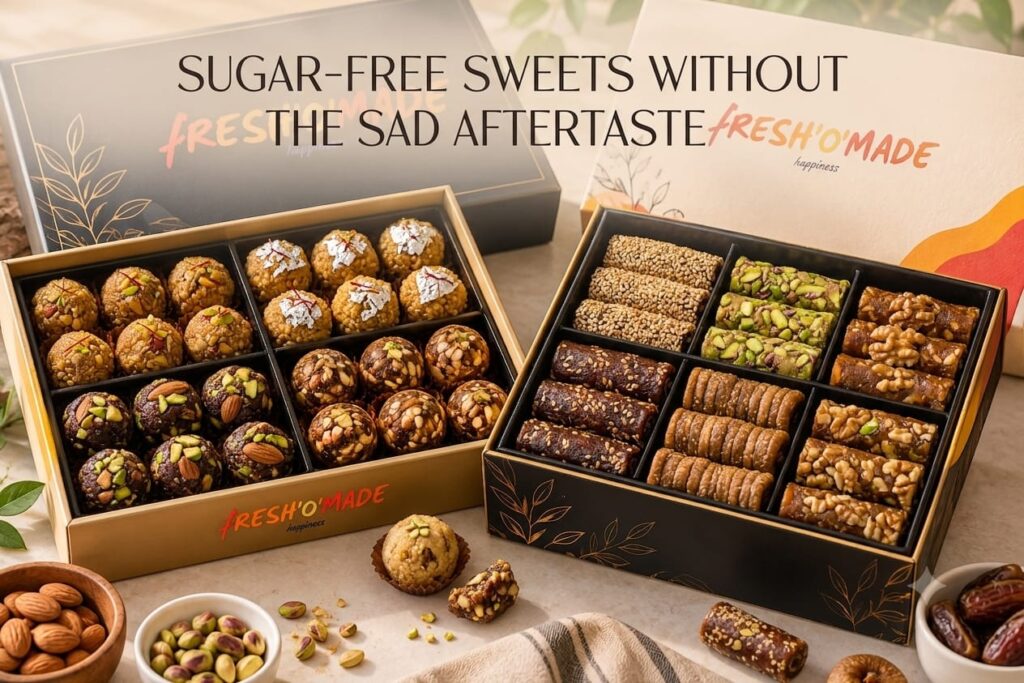
Sugar-Free Sweets Without the Sad Aftertaste: Delicious Ways to Enjoy Better Sweet Treats
There is something special about Indian sweets. A small piece of ladoo, a beautifully prepared modak, or a traditional mithai can instantly make an ordinary day feel festive. Sweets are connected with celebrations, family gatherings, festivals, gifts and simple moments of happiness.
But today, many people are becoming more conscious about how much added sugar they consume. They may want to reduce their intake of traditional sugary treats while still enjoying the flavours they love.
This is where sugar-free and reduced-sugar sweets have become interesting.
However, there is one common complaint: some sugar-free sweets simply don’t taste like the real thing.
The sweetness may feel different. Some sweeteners can leave an aftertaste. The texture may not be the same, and sometimes the aroma and richness that make an Indian sweet enjoyable can seem to disappear.
The good news is that reducing added sugar does not necessarily mean giving up flavour.
The secret is understanding how sweetness works and how other ingredients contribute to the overall taste of a sweet.
Why Do Some Sugar-Free Sweets Taste Different?
Sugar does much more than make food sweet.
In traditional Indian sweets, sugar can influence texture, moisture, colour and even the way ingredients cook together. When regular sugar is removed or replaced, the final product can therefore taste and feel different.
One reason is the type of sweetener being used.
Different sweeteners have different sweetness levels and flavour profiles. Some may taste very close to sugar, while others can have a noticeable aftertaste. The sweetness may also appear quickly and disappear quickly, instead of lingering in the way people expect.
Texture can also change.
Sugar contributes to the structure of many sweets. Removing it may result in a softer, drier, stickier or otherwise different texture depending on the recipe.
That is why simply replacing sugar with another sweetener does not always produce a satisfying result.
A well-made sweet needs balance.
The nuts, dried fruits, spices, roasting, aroma and texture should all work together rather than relying only on sweetness.
What Actually Makes a Sweet Taste Delicious?
When we eat a sweet, we don’t experience sweetness alone.
Think about a traditional ladoo. The enjoyment may come from the roasted aroma of gram flour, the richness of ghee, the nuttiness of almonds or peanuts, the fragrance of cardamom and the soft, slightly crumbly texture.
All these elements contribute to the experience.
This is particularly important when developing sweets with less added sugar.
Roasting
Roasting ingredients properly can bring out deep, nutty flavours.
For example, roasted peanuts have a completely different aroma from raw peanuts. Similarly, roasted flour can develop a warm, pleasant flavour that gives a ladoo more character.
Almonds, cashews, walnuts, pistachios, peanuts and other nuts contribute texture and flavour.
Dry fruits can also provide natural sweetness, depending on the ingredient.
Spices
Cardamom is one of the classic examples.
A small amount can add a fragrant quality that makes a sweet feel more complete without simply adding more sweetness.
Texture
Texture is often overlooked.
A sweet can be soft, chewy, crumbly, nutty or slightly firm. A combination of textures can make each bite more interesting.
This is why a delicious sweet does not need to depend on sweetness alone.
Sugar-Free and No Added Sugar Are Not the Same
This is an important distinction for anyone buying sweets.
The terms “sugar-free” and “no added sugar” should not automatically be treated as identical.
A product described as sugar-free has specific regulatory meaning, while “no added sugar” generally communicates that additional sugars were not added during preparation. However, ingredients such as fruits and dried fruits can naturally contain sugars.
For example, dates are naturally sweet, but that does not mean a sweet made with dates contains no sugar at all.
Similarly, jaggery is often considered a traditional alternative to refined sugar, but jaggery is still a source of sugar.
Therefore, consumers should look beyond the front of a package.
Check the ingredient list and nutrition information to understand what is actually in the product.
This is especially important for people who need to manage their sugar intake for personal or medical reasons. Product labels should be read carefully, and people with specific dietary or medical requirements should seek advice from a qualified professional.
Naturally Sweet Ingredients Used in Indian Sweets
Indian cuisine already has many ingredients that contribute natural sweetness and rich flavour.
Dates
Dates have a naturally sweet taste and a soft, sticky texture.
They can be used in different types of homemade sweet preparations, including dry fruit-based treats and energy-style bites.
Because dates contain naturally occurring sugars, however, they should not automatically be described as “sugar-free.”
Dried figs
Anjeer, or dried figs, have a distinctive flavour and chewy texture.
They are often paired with nuts and other dried fruits to create rich traditional-style sweets.
Coconut
Dry coconut can add both flavour and texture. Its natural aroma works particularly well with Indian sweets and snacks.
Nuts
Peanuts, almonds, cashews and other nuts can make a sweet more satisfying because of their roasted flavour and texture.
The key is not simply finding one “magic” ingredient.
The best results usually come from balancing several ingredients carefully.
Is Jaggery a Sugar-Free Alternative?
This is one of the most common questions when people look for traditional sweets.
Jaggery is a traditional Indian sweetener made from sugarcane or other sources, depending on the type. It has a deeper flavour and distinctive colour compared with refined sugar.
But jaggery is not sugar-free.
It still contains sugars and therefore should not be marketed as a sugar-free ingredient simply because it is less refined.
What makes jaggery appealing in traditional recipes is its characteristic taste.
In a peanut ladoo, for example, roasted peanuts combined with jaggery and cardamom create a familiar Indian flavour profile.
The important thing is to use accurate descriptions and help customers understand what they are buying.
Can Traditional Indian Sweets Taste Good With Less Added Sugar?
Yes, but the recipe needs to be designed as a complete product rather than simply removing sugar.
Traditional sweets have developed over generations around particular combinations of ingredients.
Consider a ladoo.
The flavour can come from roasted flour, nuts, seeds, spices, ghee and dried fruits. The sweetness is only one part of the overall experience.
This gives homemade food makers an opportunity to focus on flavour in a broader way.
Instead of asking only, “How sweet should this be?” it can be useful to ask:
What should the customer taste first?
Should it be the roasted peanut?
The aroma of cardamom?
The flavour of dry fruits?
The richness of ghee?
The texture of coconut?
When these elements are balanced well, the sweet can remain enjoyable without relying entirely on an intensely sweet taste.
Why Homemade Sweets Can Offer a Different Experience
Homemade food has a special place in Indian households.
One reason is transparency.
When food is prepared in small batches, the maker can pay closer attention to the ingredients and preparation process.
For customers, this can make it easier to understand what they are purchasing.
Homemade sweets can also have a more traditional character. Recipes can focus on familiar ingredients and preparation techniques rather than trying to create an extremely sweet flavour.
At Freshomade, the focus is on homemade cookies, ladoo, modak, papad and traditional Indian snacks prepared with care.
The range includes products such as dry fruit ladoo, peanut ladoo, methi ladoo, peanut modak, anjeer modak, dates dry fruit modak and ragi modak, along with homemade cookies and savoury snacks.
Each product has its own ingredients and flavour profile, so customers should always check the individual product information rather than assuming every product has the same nutritional characteristics.
Freshomade and the Joy of Homemade Indian Treats
Food is not only about nutrition.
It is also about taste, tradition and the memories connected with it.
At Freshomade, the idea is to bring the warmth of homemade food into everyday life.
From traditional ladoo and festive modak to cookies, papad and other snacks, homemade preparation allows familiar Indian flavours to remain part of modern lifestyles.
For someone searching for homemade food in Mumbai, choosing a small homemade food brand can also be a way to explore traditional flavours while supporting a growing local business.
The goal is simple: create food that feels familiar, comforting and enjoyable.
As Freshomade says:
Taste the love in every bite.
What Should You Check Before Buying Sugar-Free Sweets?
If you are specifically looking for sugar-free or reduced-sugar sweets, don’t rely only on the product name.
Here are some useful things to check.
-
- Read the ingredient list
Look at all the ingredients rather than focusing only on the word “sugar-free.”
-
- Check the nutrition information
Nutrition information can help you understand the amount of carbohydrates, sugars and other nutrients in the product.
-
- Understand the sweetener
If a product uses a sugar substitute, find out which sweetener is being used.
Different sweeteners can have different taste and texture characteristics.
-
- Check the serving size
A nutrition panel is meaningful only when you understand the serving size to which it applies.
-
- Don’t assume jaggery means sugar-free
Jaggery has a traditional image, but it is still a source of sugar.
-
- Remember dried fruits contain natural sugars
Dates, figs and other dried fruits can contribute natural sweetness, but they also contain naturally occurring sugars.
-
- Look at storage instructions
Homemade sweets can have different storage requirements depending on their ingredients.
Always follow the manufacturer’s storage instructions.
How to Enjoy Sweet Treats Without Losing the Pleasure
Reducing added sugar does not have to mean removing enjoyment from food.
For many people, the better approach is to pay attention to quality, flavour and portion size.
Instead of choosing a sweet only because it is extremely sweet, look for products with interesting flavours and textures.
A small piece of a rich dry fruit sweet can be more satisfying than eating a larger quantity of something that tastes overly sweet.
The occasion also matters.
Indian sweets are traditionally associated with festivals, celebrations and sharing. They are often enjoyed alongside family and friends.
The aim should not be to turn every sweet into a health product.
A sweet is still a treat.
The goal is to make thoughtful choices while keeping the pleasure of eating intact.
Homemade Ladoo for Festivals and Celebrations
Festivals in India are closely connected with sweets.
From Diwali to Ganesh Chaturthi and other family celebrations, sweets often become part of the occasion.
Modak is a wonderful example.
Peanut modak, ragi modak, anjeer modak and dates dry fruit modak each offer a different combination of flavours and textures.
The right choice depends on personal taste and the ingredients used in the particular recipe.
For people searching for homemade sweets in Mumbai, local homemade brands can offer an interesting alternative to mass-produced options.
The most important thing is to understand the product, check its ingredients and choose according to your own preferences and dietary requirements.
Frequently Asked Questions
Are sugar-free sweets completely free from sugar?
Not necessarily in the way consumers sometimes assume. “Sugar-free” is a specific product claim, and the product may contain naturally occurring sugars or other carbohydrate sources depending on its ingredients. Always check the label.
What is the difference between sugar-free and no added sugar?
They are different claims. “No added sugar” generally means that additional sugars were not added during preparation, but naturally occurring sugars can still be present.
Can dates be used in homemade sweets?
Yes. Dates are naturally sweet and can be used in many homemade sweet preparations. However, dates contain naturally occurring sugars, so a date-based sweet should not automatically be called sugar-free.
Is jaggery sugar-free?
No. Jaggery is still a source of sugar. Its appeal comes from its traditional preparation and distinctive flavour, not from being sugar-free.
How can sweets taste good with less added sugar?
Flavour can come from roasted nuts, dry fruits, coconut, spices, ghee, seeds and careful preparation. A good balance of aroma, texture and sweetness can make a sweet enjoyable.
Are homemade sweets healthier than packaged sweets?
There is no universal answer. It depends on the ingredients, recipe, preparation and portion size. Homemade food can offer greater transparency, but customers should still check the actual ingredients and nutrition information.
How should homemade sweets be stored?
Storage depends on the specific ingredients and recipe. Always follow the storage instructions provided with the product and use an airtight container when recommended.
What should I check before buying a sugar-free sweet?
Check the ingredient list, nutrition information, sweetener used, serving size, storage instructions and the exact meaning of any claims on the package.
Final Thoughts
A good sweet should not be judged only by how intensely sweet it tastes.
The aroma of roasted nuts, the flavour of cardamom, the texture of dried fruits and the familiarity of traditional Indian recipes can all contribute to a memorable bite.
That is why the search for sugar-free sweets without the sad aftertaste is really a search for balance.
Whether you are exploring homemade ladoo, dry fruit treats, traditional modak or other homemade snacks, take a moment to understand the ingredients and choose what suits your preferences.
For Freshomade, homemade food is about bringing traditional flavours into everyday life with care and attention.
From homemade cookies and ladoo to modak, papad and traditional snacks, every product has its own story and flavour.
Freshomade — Taste the love in every bite.